Chulalongkorn Physician Recommends Whooping Cough Vaccine to Reduce Infection Risk for All Ages
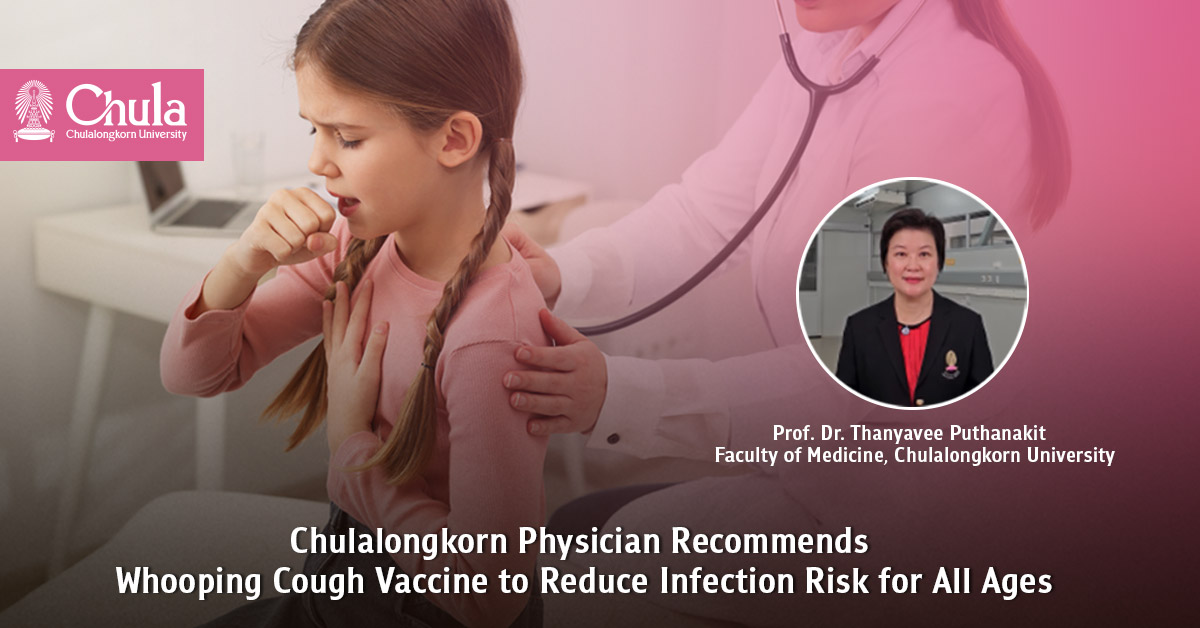
“Whooping Cough” is a bacterial respiratory tract infection that causes severe, persistent coughing, with particularly severe symptoms in young children under 6 months old. Older children, teenagers, and adults who have previously been vaccinated typically develop less severe symptoms. However, vaccine-induced immunity does not last a lifetime, and individuals are recommended to consider receiving a booster shot to enhance immunity.
It has appeared that whooping cough has reappeared in some areas. Prof. Dr. Thanyavee Puthanakit, Head of Division of Infectious Diseases, Department of Pediatrics, and Head of the Center of Specialized Research in Children with Infectious Diseases and Vaccines, Faculty of Medicine, Chulalongkorn University, shares some knowledge about the prevention of whooping cough vaccines for people of different age groups, including children under 10 years old, teenagers, adults, and pregnant women.

Head of Division of Infectious Diseases, Department of Pediatrics, and Head of the Center of Specialized Research in Children with Infectious Diseases and Vaccines, Faculty of Medicine, Chulalongkorn University
Tdap Vaccine: Whooping Cough Prevention
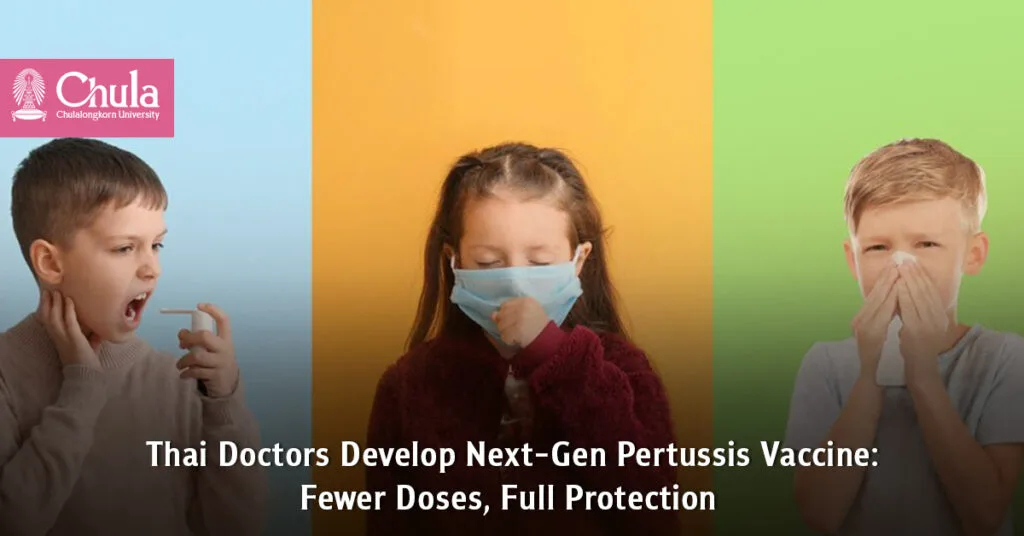
Whooping cough is caused by the Bordetella pertussis bacteria, which is easily transmitted through droplets from coughing or sneezing, leading to severe coughing or continuous coughing for longer than 2 weeks. There are 2 types of vaccines:
- Pertussis Vaccine for Childhood Immunization is a vaccine that children should receive in 5 doses, 3 in the first 6 months and 2 booster shots during the ages of 1-2 years and 4-5 years, respectively. This vaccine is typically part of a cocktail of vaccines, administered together with vaccines for other diseases such as diphtheria and tetanus in the same injection.
- Tdap Pertussis Booster Vaccine for adolescents, adults, and pregnant women is a reduced-dose pertussis vaccine to boost immunity for teenagers aged 10 and above, including adults who have been previously vaccinated. The purpose is to enhance immunity to prevent whooping cough and increase the effectiveness of disease prevention, especially during outbreaks. For pregnant women, it is recommended to be administered during each pregnancy in order to pass on pertussis immunity to protect the infants from birth until 6 months of age.
Prof. Dr. Thanyavee recommended that parents of children under 10 years old review the children’s whooping cough vaccination history and make sure they have received 5 complete doses. If a child has received all recommended vaccines by the age of 10, there is no need for additional vaccines. For teenagers or adults, it may be advisable to receive a Tdap booster vaccine to increase immunity during an outbreak. Anyone who has previously received the Tdap vaccine should wait at least 10 years before the next dose.

Treatments for Whooping Cough
Treatment for patients with whooping cough involves taking antibiotics for 5 days to kill the bacteria, alleviate symptoms, and break the cycle, reducing the spread of the disease to family members and close contacts.
However, since those infected with whooping cough can transmit the disease to close contacts from the onset of illness and continue to do so for up to 3 weeks, close contacts or household members have a high chance of contracting the infection during this period. Therefore, it is recommended that close contacts consult a doctor to receive preventive antibiotics to kill the bacteria before symptoms of whooping cough appear.

Guidance to Prevent Infection and Spread of Whooping Cough
Maintaining proper hygiene and preventing respiratory tract infections, whether bacterial such as whooping cough or other diseases prevalent during winter, is extremely important. This includes frequently washing hands to reduce personal infection risk, wearing a face mask when experiencing coughing, sneezing, or runny nose to minimize disease transmission to close contacts, and considering wearing a face mask when in crowded areas.
In addition, Prof. Dr. Thanyavee stressed that whooping cough is preventable with a vaccine. It is recommended that people receive vaccines completely and appropriately for their age, whether vaccines for children or boosters for teens and adults. The Tdap vaccine is an important factor to protecting yourself and your family from whooping cough.
If you develop suspicious symptoms, such as continuous coughing for over 2 weeks or close contact with whooping cough patients, you can get a screening check and consult a doctor at a hospital for timely treatment and reducing risk of infection for others.