Chula Students Develop Milk Pathogen Test Kit, Win TED Youth Startup Grant
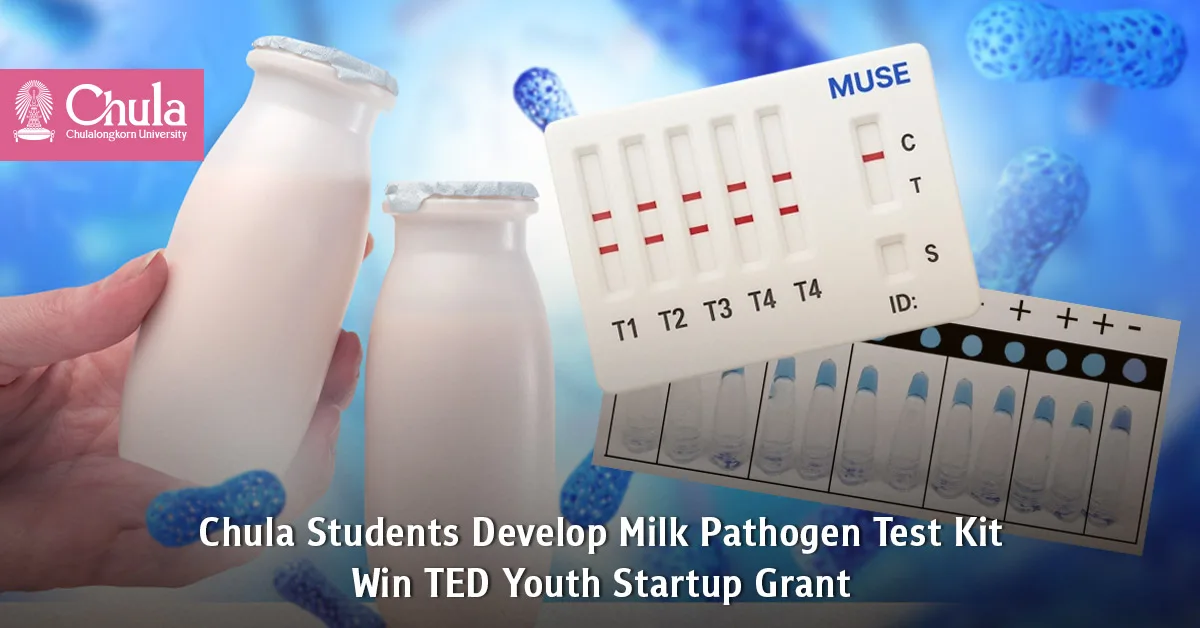
Inspired by the widely used and user-friendly COVID-19 strip test kits, a team of science students from Chulalongkorn University has developed a test kit for detecting pathogens in milk and dairy products. The team combined the LAMP technique with strip test technology to create a simple screening tool for harmful bacteria that can be easily used by the public. This innovation received a TED Youth Startup grant worth 150,000 baht from the university’s innovation center, CU Innovation Hub, to further develop the kit into a practical product.
The Muse team behind the innovation consists of Ms. Charee Songboonkaew, Ms. Zeaneta Maria Goreti Arnold, a master’s student in Microbiology, and Ms. Phutthida Chan-iam, a fourth-year undergraduate student in Microbiology at the Faculty of Science.
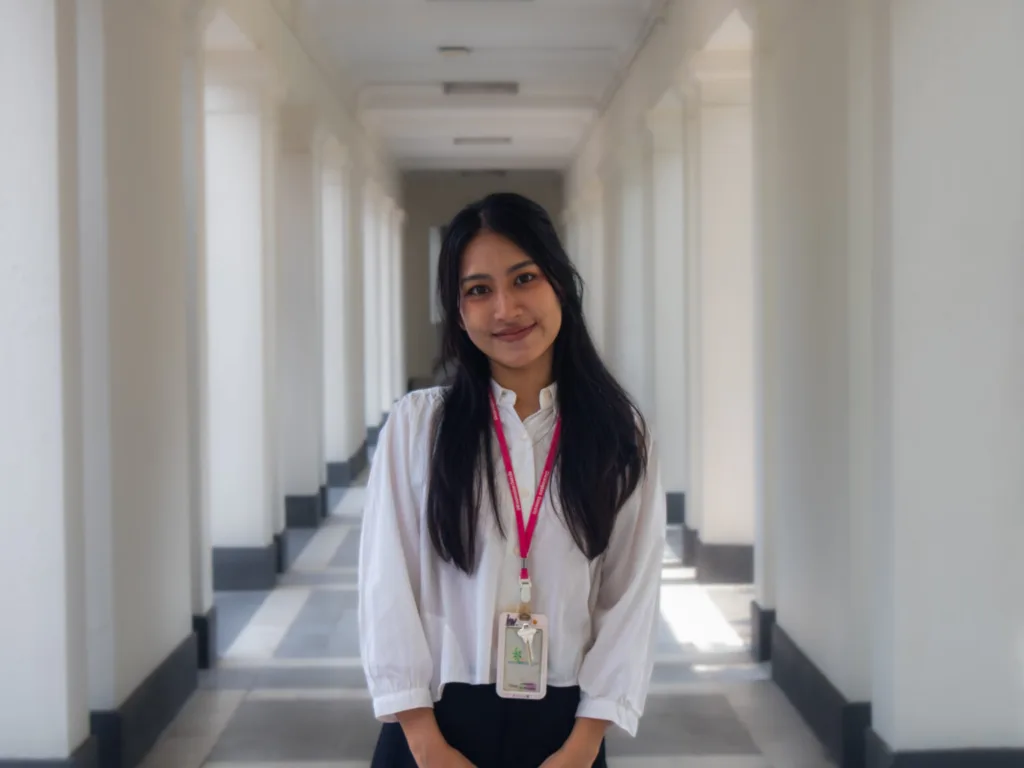
Team Leader of Muse
Ms. Charee Songboonkaew, team leader of Muse, explained: “The milk pathogen test kit can be used to test products containing milk, such as fresh milk, cheese, and yogurt. Like a COVID-19 test strip, it is designed as a multiplex test strip capable of detecting four major bacterial pathogens: Salmonella spp., Listeria monocytogenes, Staphylococcus aureus, and E. coli. These bacteria commonly contaminate food and may cause health problems such as food poisoning, stomach pain, diarrhea, vomiting, or even severe symptoms, especially among vulnerable groups. Early detection is therefore important for consumer safety. Our primary target users are small business operators, helping them reduce the cost and time required for sending samples to external laboratories.”
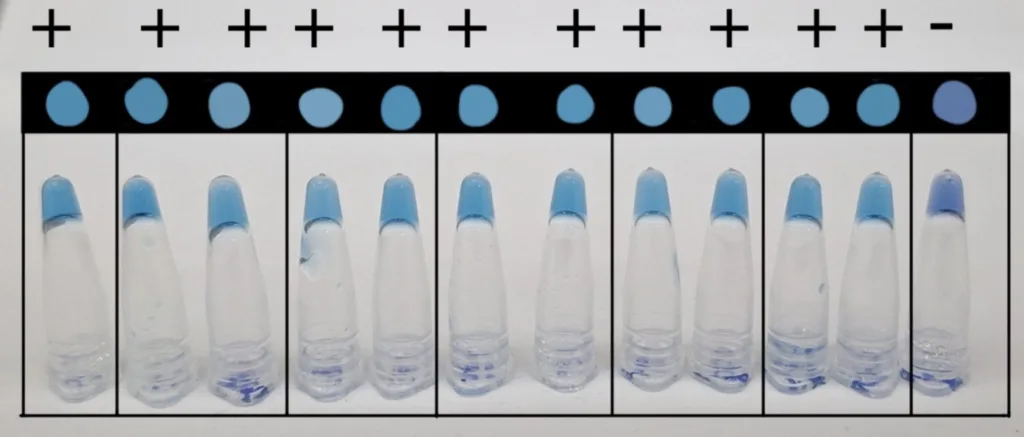
She further explained that LAMP (Loop-mediated Isothermal Amplification) is a rapid, highly specific, and highly sensitive genetic amplification method that does not require complicated temperature-cycling equipment like PCR (Polymerase Chain Reaction). The technique is more cost-effective and takes around 40 minutes, compared to about two hours for PCR. When combined with multiplex lateral flow detection (mLFD), the results can be easily interpreted by general users, making it convenient for preliminary pathogen screening.
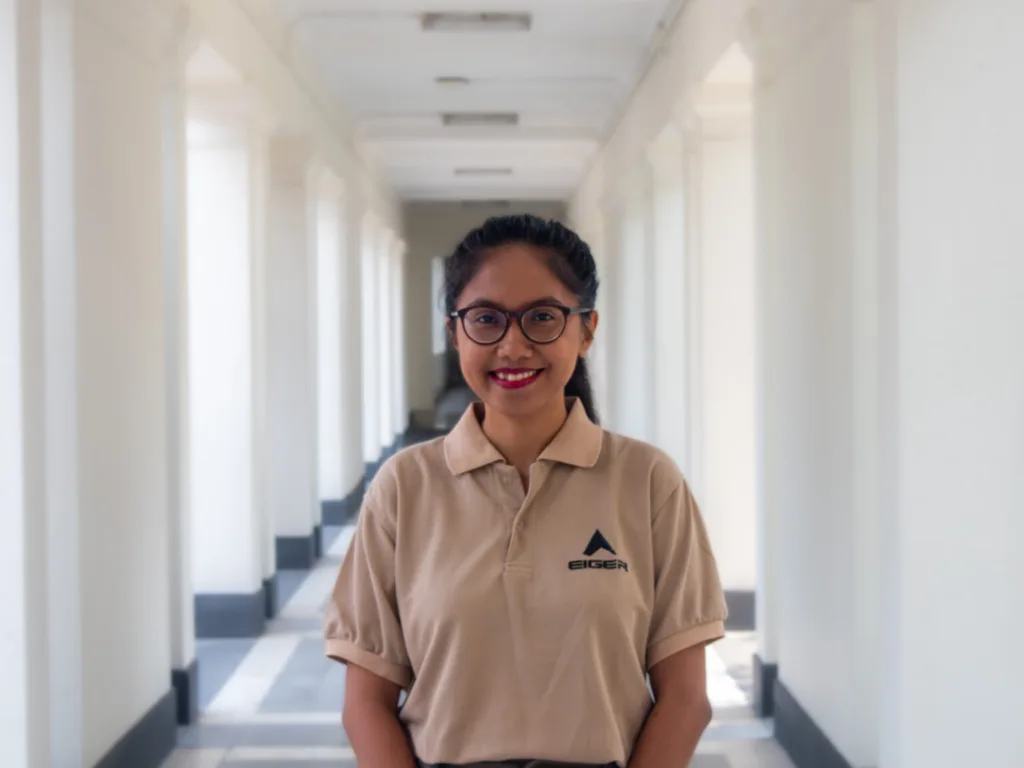
A master’s student in Microbiology, Chulalongkorn University
Ms. Zeaneta Maria Goreti Arnold added: “Using the LAMP technique together with mLFD for detecting pathogens in milk has several advantages because genetic amplification can occur at a constant temperature throughout the process. In contrast, PCR requires multiple temperature cycles and specialized thermocycler equipment. With LAMP, only a simple heat block is needed. This is one of LAMP’s key advantages over PCR while maintaining comparable specificity and sensitivity.”
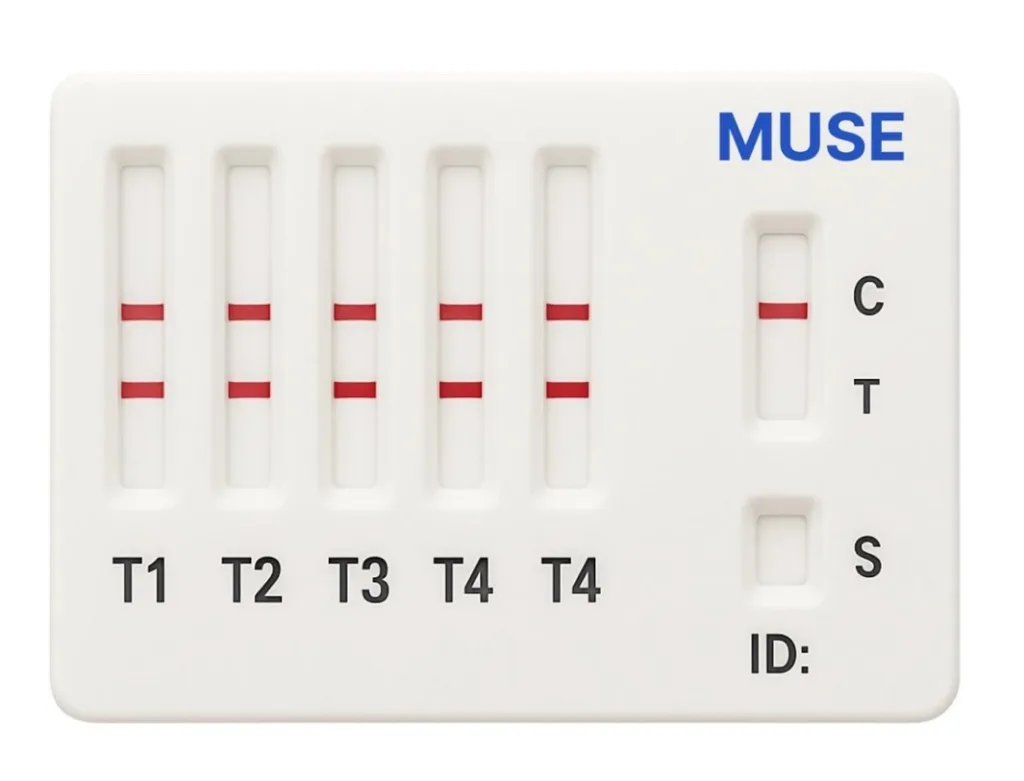
Currently, the project is still under development. The team aims to improve stability, shorten testing time, and make the kit even easier to use.
Ms. Charee explained: “Normally, LAMP results are interpreted through changes in color indicators after the reaction occurs, but the colors can sometimes be very similar and difficult to distinguish, which may lead to incorrect readings. We therefore integrated the technique with a strip test format that displays visible lines similar to COVID-19 tests, making results easier to read. In the future, the technology could also be adapted for detecting pathogens in other types of food.”
The milk pathogen test kit project is being supervised under the Youth Startup Entrepreneurship Development Network at CU Innovation Hub, with Associate Professor Dr. Naraporn Somboonna from the Department of Microbiology, Faculty of Science, serving as academic advisor.
Ms. Arnold said they learned about the TED Youth Startup competition through their professor and found it highly appealing because students conducting research in any field could apply. The 150,000-baht grant covers not only laboratory materials and chemicals but also future business plans such as marketing and product commercialization strategies.
She noted that the team is already planning how to introduce the product to target markets and make entrepreneurs and the public aware of the test kit once development is complete.
According to Ms. Charee, “CU Innovation Hub has provided excellent guidance. The plan is that once the product is fully developed, we will first allow small business operators to test the kits free of charge and gather feedback for improvements. If the response is positive, we will expand trials to factories and medium- and large-scale businesses.”