Chula’s “Water Resilience Center” Hosts Water Economy Forum
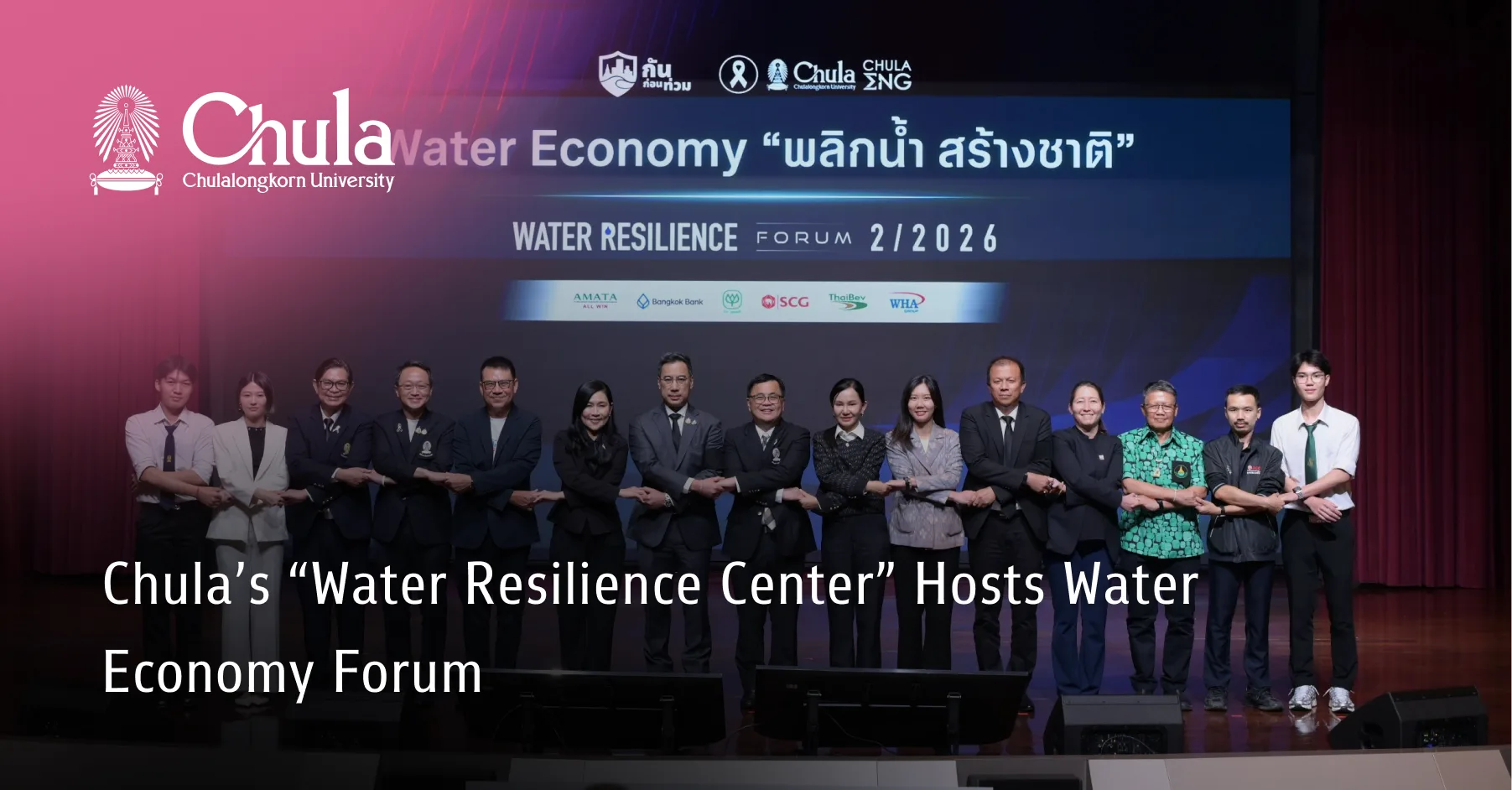
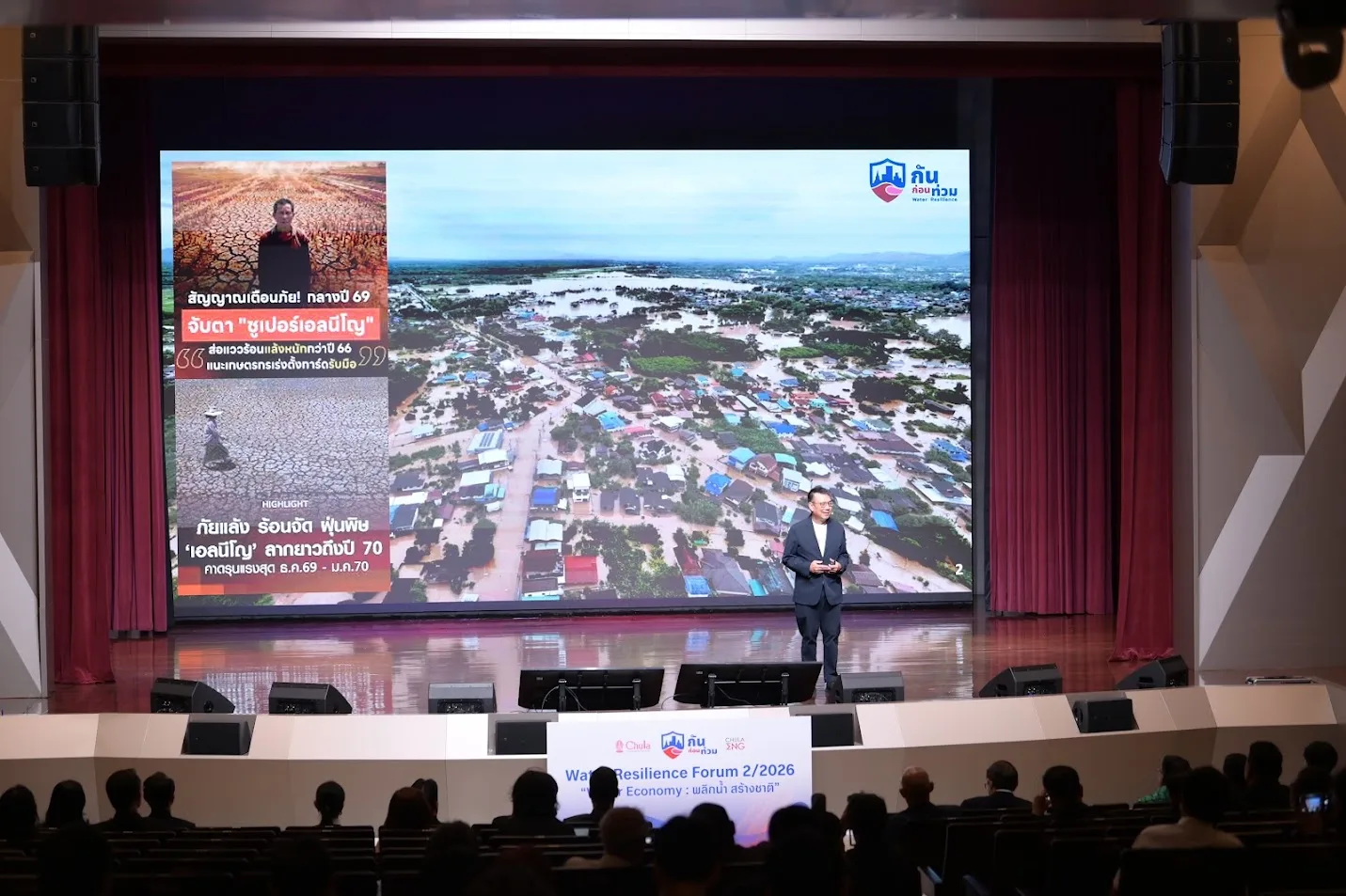
The Water Resilience Center hosted the Water Resilience Forum 2/2026 under the theme “Water Economy: Transforming Water to Build the Nation.” The forum highlighted how Thailand is facing both droughts and floods caused by climate change and increasingly volatile weather patterns. These recurring disasters continue to inflict economic losses and suppress GDP growth.
Speakers urged a shift in perspective: water should no longer be viewed solely as a natural disaster but as a core economic issue for the nation. Properly managed, water can create enormous economic value; poorly managed, it can cause severe losses. The forum called for proactive water management and broad collaboration to transform water risks into economic opportunities—moving Thailand from mere survival to prosperity through three key proposals:
- Elevate the water crisis to a “national agenda” by restructuring and integrating water-management agencies for more effective coordination.
- Build “Water Smart Communities” by empowering communities and civil society with water-management knowledge and capabilities.
- Invest in a National Water Data Platform using real-time data for forecasting, early warning systems, and proactive planning.
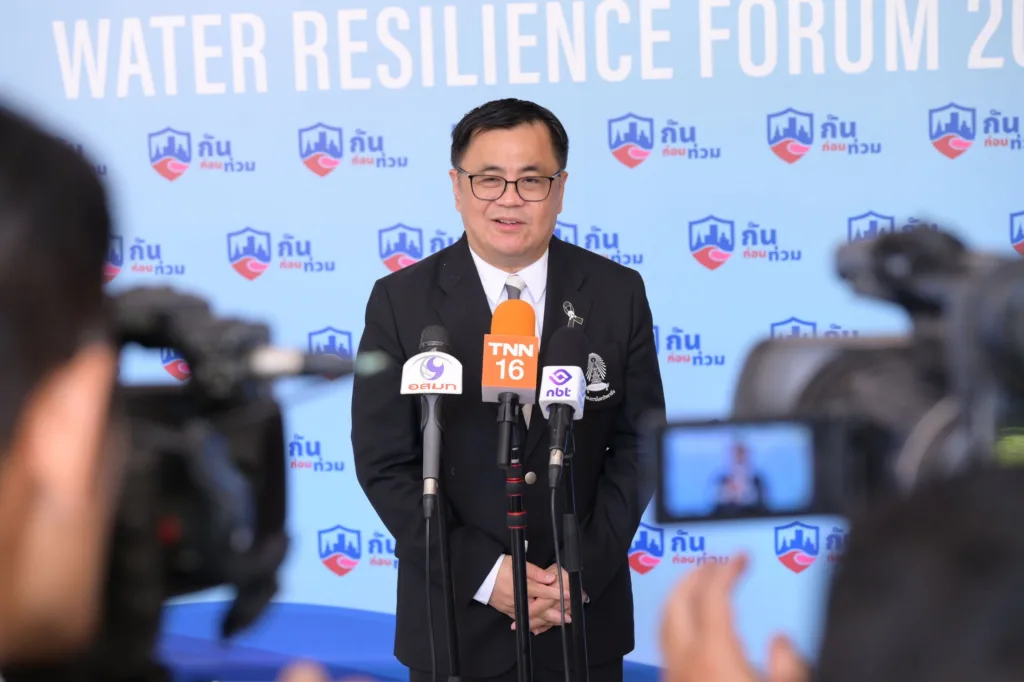
President, Chulalongkorn University
Prof. Dr. Wilert Puriwat, President of Chulalongkorn University, stated that Thailand is experiencing “extreme weather conditions,” including both floods and droughts, affecting agriculture, industry, tourism, and the cost of living. Damage from the devastating 2011 floods reached 1.43 trillion baht. In the following years, 2012–2013, Thailand suffered consecutive droughts, causing losses of approximately 30 billion baht.
“Thailand loses money to water every year, whether from drought or flooding. If we continue using the same approaches, these losses will be repeated endlessly. That is why we are promoting the concept of a water economy—turning water from a risk into an economic asset,” he said. Through cooperation between the Water Resilience Center, Chulalongkorn’s Faculty of Engineering, global partners, and private-sector organizations, the initiative aims to use data, science, and innovation to transform water crises into economic opportunities.
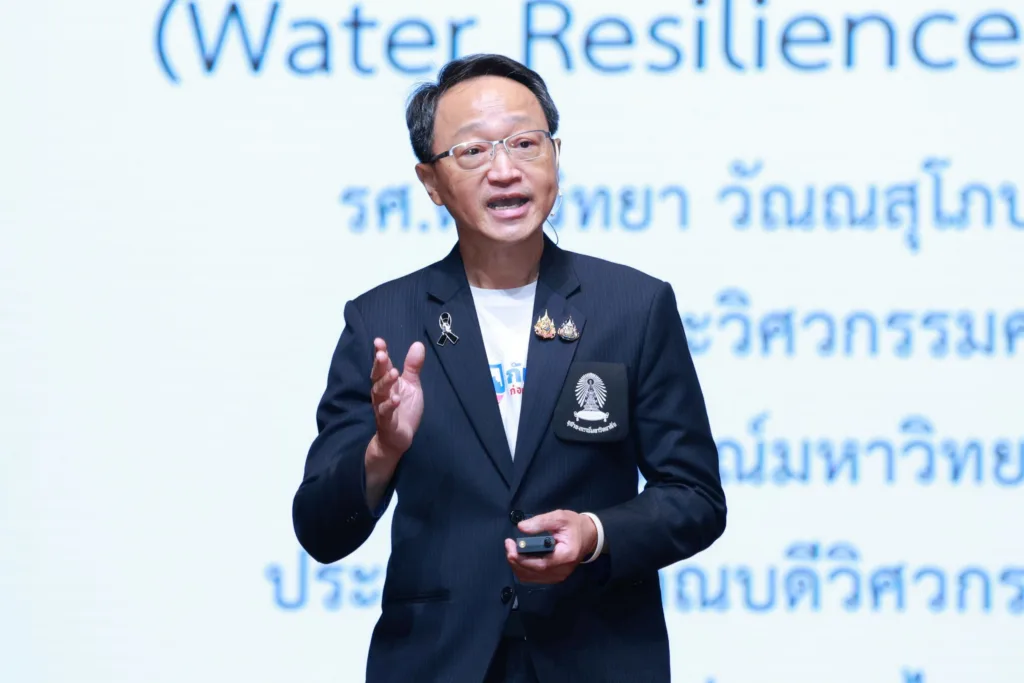
Dean, Faculty of Engineering and
Chairman, Water Resilience Center, Chulalongkorn University
Assoc. Prof. Dr. Witaya Wannasuphoprasit, Dean of the Faculty of Engineering and Chairman of the Water Resilience Center, emphasized that water resources are not merely an environmental issue but a critical infrastructure component of the modern economy—comparable to energy, digital systems, and logistics. Thailand’s water resources are tied to an economic structure worth over 17 trillion baht.
He warned that Thailand faces escalating climate risks from El Niño, droughts, irregular rainfall, and severe flooding, all of which directly affect the economy, society, and investor confidence. Lessons from the 2011 floods showed GDP could decline by as much as 2.5%, and future climate extremes are expected to become more frequent and severe.
Assoc. Prof. Witaya urged society to rethink water as an “economic asset” under the Water Economy framework. In this view, water is a “double-edged coin” of the economy. On one side, it acts as an “economic generator,” supporting agriculture, industry, tourism, public health, and quality of life. On the other, without effective management, it becomes an “economic disruptor,” damaging businesses, production, and vulnerable communities.
He stressed that Thailand’s challenge is not simply responding to floods and droughts but building a “climate-resilient economy” through strategic investments driven by data, science, and cooperation across sectors. The Water Resilience Center serves as a neutral academic platform for synthesizing information, developing knowledge, and communicating water risks to support policymaking while collaborating with partners from countries such as the Netherlands and Japan.

Secretary-General, Thailand’s Office of the National Water Resources (ONWR)
Mr. Chayan Muangsong, Secretary-General of Thailand’s Office of the National Water Resources (ONWR), stated during the “Transforming Water Policy to Build the Economy” session that recurring floods, droughts, and water pollution continue to disrupt livelihoods and economic activity. The government has tasked ONWR with integrating water-related agencies to elevate water crisis management into a true national agenda with unified, efficient coordination.
He emphasized improving weather forecasting accuracy and rapid warning systems to help citizens respond in time to disasters. ONWR has proposed measures for the rainy season, drought mitigation, and water-quality control while monitoring drought-prone areas—especially outside irrigation zones. The Cabinet has also approved provincial water-resource subcommittees in all 76 provinces.

Advisor, Faculty of Engineering and
Vice Chairman of the Water Resilience Center, Chulalongkorn University
Mr. Roongrote Rangsiyopash, advisor to the Faculty of Engineering and Vice Chairman of the Water Resilience Center, concluded the forum by noting that Thailand has entered an era where water is no longer merely a seasonal issue but a constant economic risk. Under El Niño and climate change conditions, Thailand faces droughts, irregular rainfall, and increasingly volatile water patterns that directly affect agriculture, industry, and household costs.
He pointed out that the government continues spending large sums on repeated disaster relief instead of investing in sustainable solutions. However, Thailand already has successful local models demonstrating how water can be transformed into opportunity.
For example, Kanchanaburi Province has effectively managed Srinagarindra and Vajiralongkorn dams using “fishbone” water-distribution systems and natural retention areas (“monkey cheeks”) to reduce floodwater before it reaches economic zones. Internationally, China’s Three Gorges Dam illustrates how large-scale water infrastructure can protect major economic areas and provide long-term stability.
Thailand’s major challenge, he argued, is the lack of connectivity between local pilot models and national-level implementation.
The Water Resilience Center and private-sector partners proposed three major actions:
- Truly elevate the water crisis to a national agenda through integrated governance.
- Create “Water Smart Communities” capable of managing water independently.
- Invest in a National Water Data Platform using real-time data for forecasting and proactive planning.



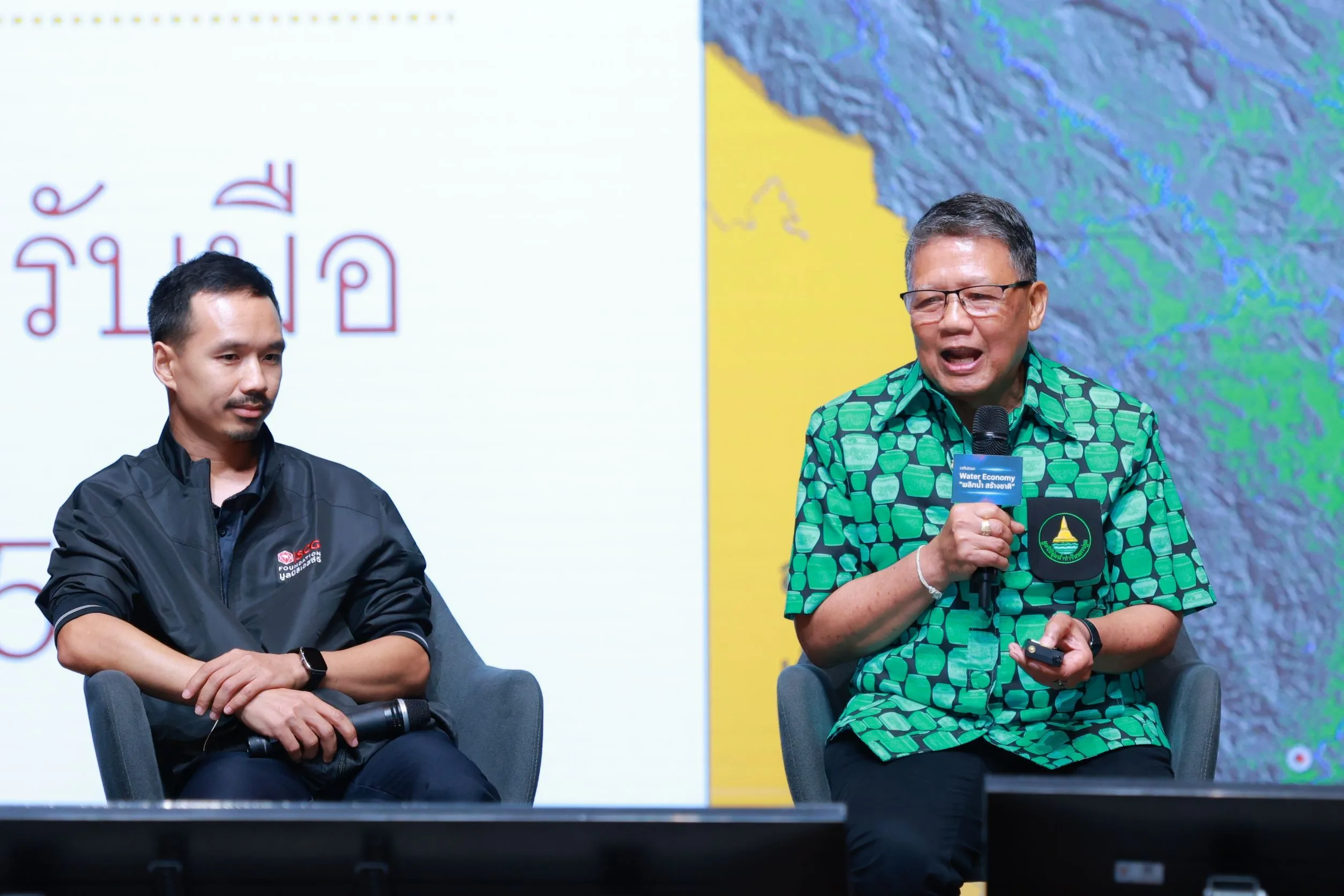

In the panel “Designing Resilience: Smart Urban Design for Living with Water,” Prof. Miho Mazereeuw, Director of the MIT Climate Mission and Urban Risk Lab, together with Asst. Prof. Sarayut Supsook, Dean of Chulalongkorn’s Faculty of Architecture, presented case studies of buildings and urban spaces designed to withstand flooding while functioning as community centers during disasters.
Prof. Mazereeuw highlighted examples from Japan demonstrating “dual-use design,” where disaster prevention infrastructure also supports broader economic and community functions. Asst. Prof. Sarayut discussed the vulnerability of Thai cities due to past development patterns and emphasized the role of resilient architecture in reducing risks and improving long-term quality of life.

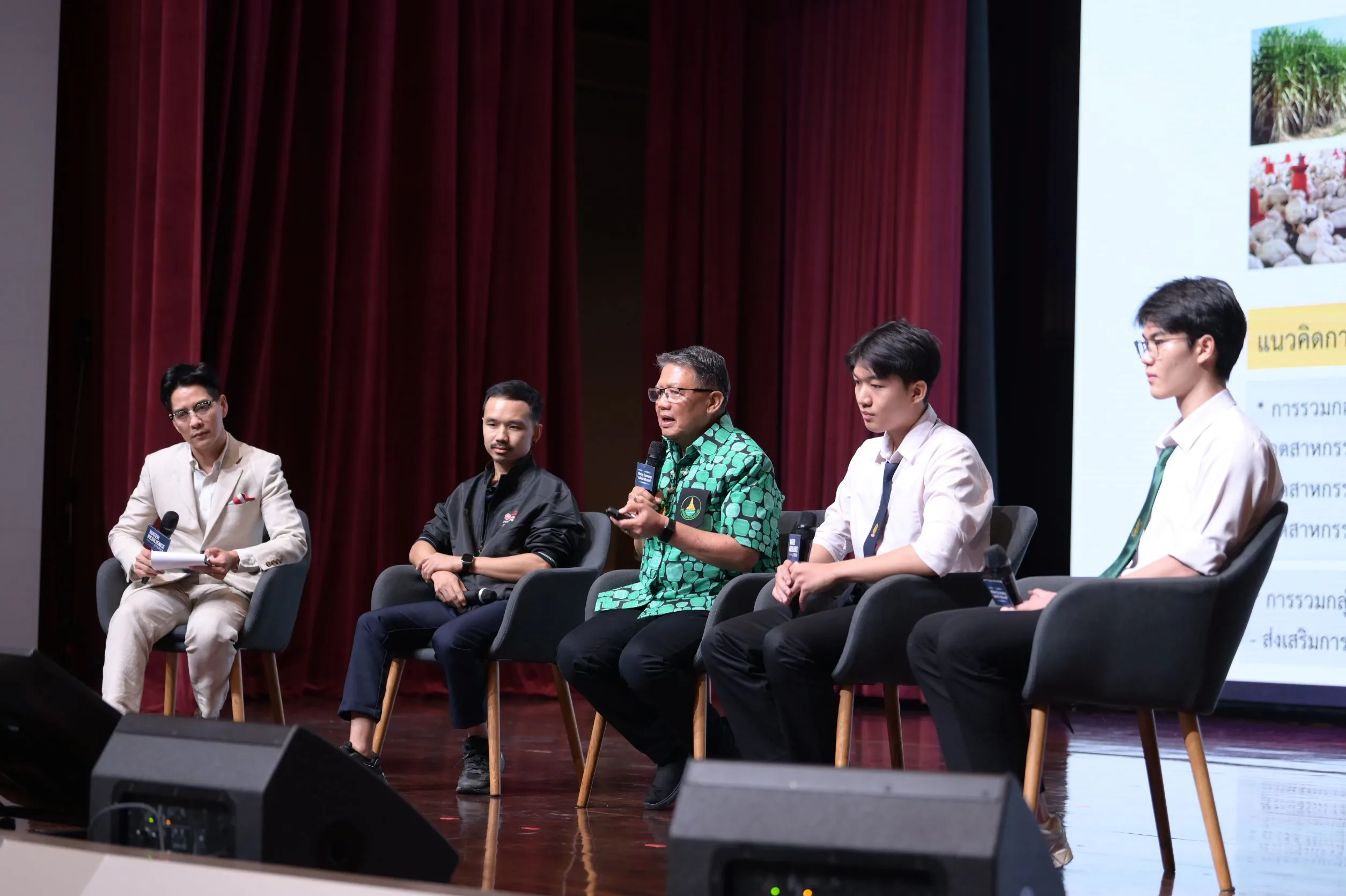
Mr. Nathanon Khonthes, Manager of the Tha Chin–Nakhon Pathom River Basin Foundation, explained how Nakhon Pathom Province previously suffered recurring floods, droughts, pollution, and fragmented water management. A turning point came in 2023 when authorities introduced Geo-Social Maps integrating geographic and community data into a shared system for comprehensive water planning.
This data-driven approach enabled communities to explore how water resources could create economic value in agriculture, industry, and tourism. Research projects became a neutral platform connecting government agencies, private companies, local communities, and civil society around shared data.
As a result, Nakhon Pathom successfully transformed water management into economic growth. Pomelo orchards alone are expected to produce nearly 6,000 tons this year, worth approximately 1.5 billion baht, averaging around 1 million baht per family. Effective water management prevented flood damage to orchards last year and demonstrated how good water governance can build long-term local prosperity.

SCG Foundation
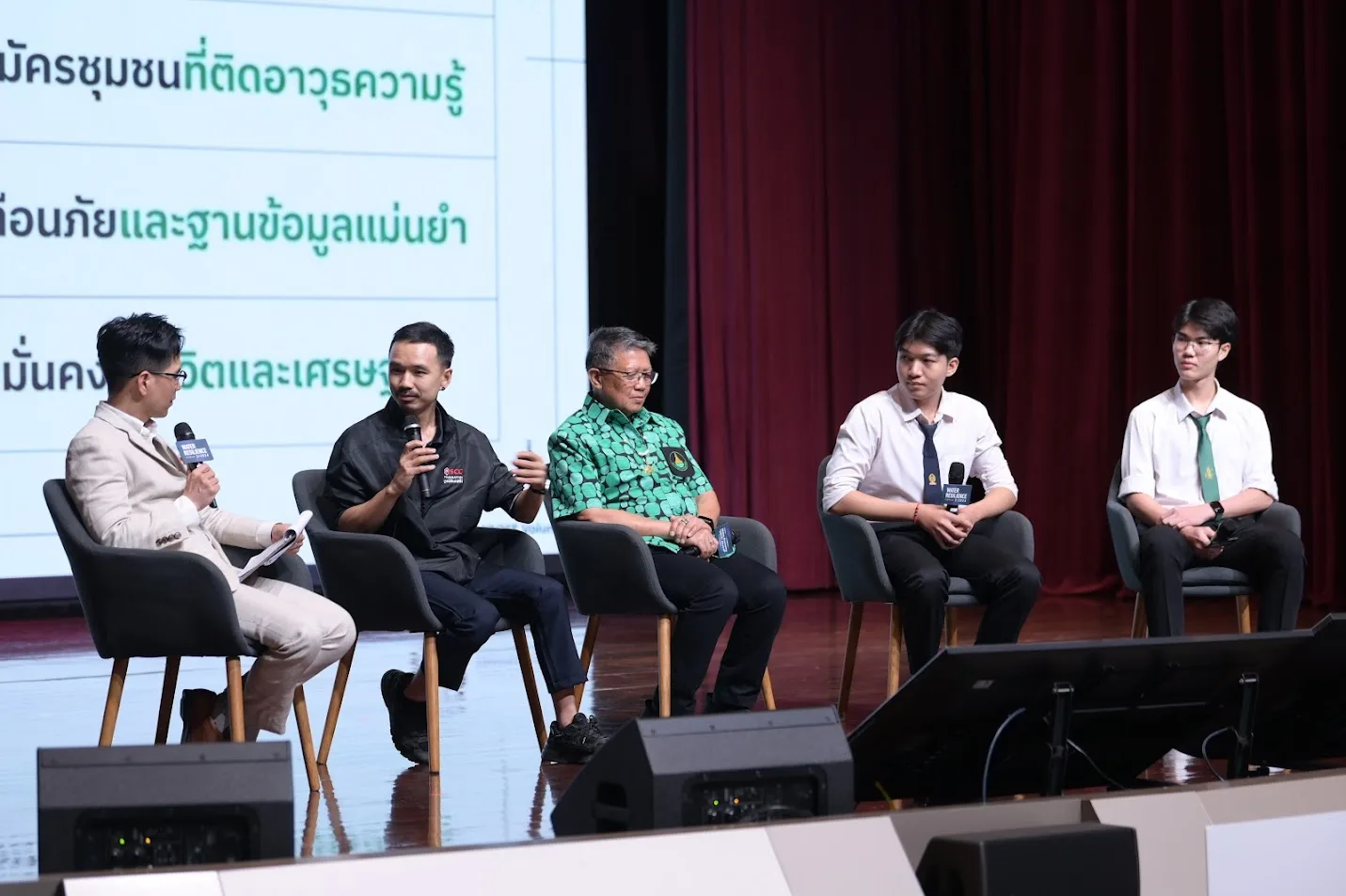
Mr. Worasathit Buadaeng of the SCG Foundation reflected on flood-relief efforts in northern Thailand, noting that floods destroy not only property but also lives and futures. Many communities still lack critical information such as risk zones, safe areas, and vulnerable populations, resulting in ineffective assistance.
He proposed three urgent measures:
- Use accurate technology and warning systems to replace panic with preparedness.
- Create Geo-Social Maps so communities understand their own risks.
- Develop community disaster volunteers prepared for immediate response.

Developers of the AI system “Nong Fao Nam” and Winners of the 2025 SCB Challenge Competition
Thai youth innovators Kittinan Songkham and Nathon Khueantha, developers of the AI system “Nong Fao Nam” and winners of the 2025 SCB Challenge competition, explained that their inspiration came from severe flooding in Chiang Rai Province. Their AI system analyzes real-time water-level data to forecast flooding trends, monitor water levels 24/7, and issue alerts through the SmartFlood AI website and the “Nong Fao Nam” LINE chatbot, helping communities prepare in advance and reduce potential losses.
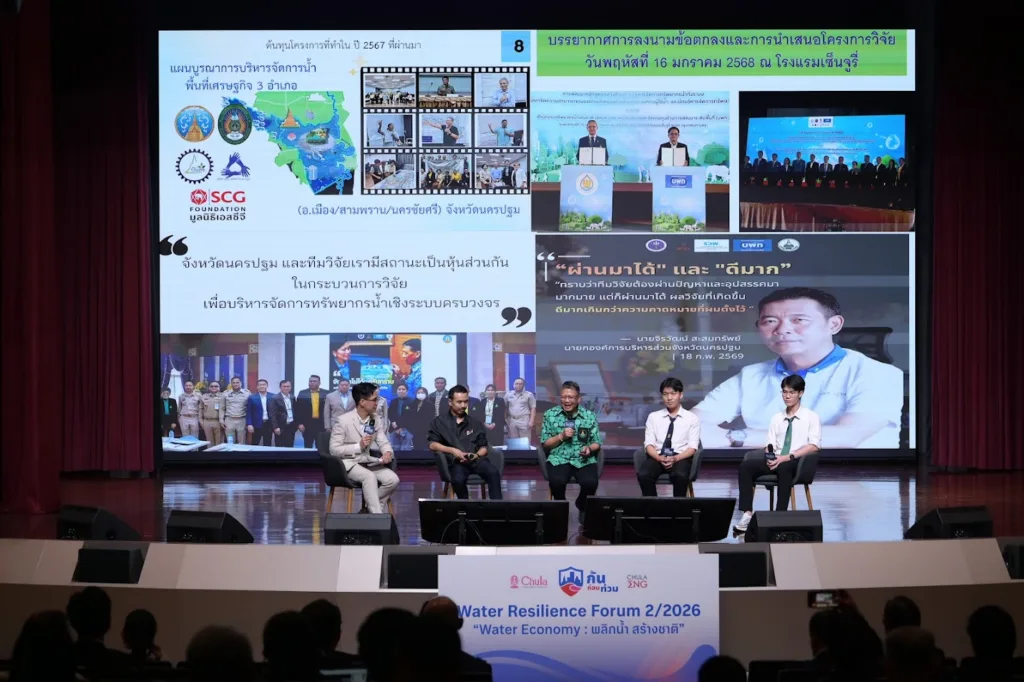
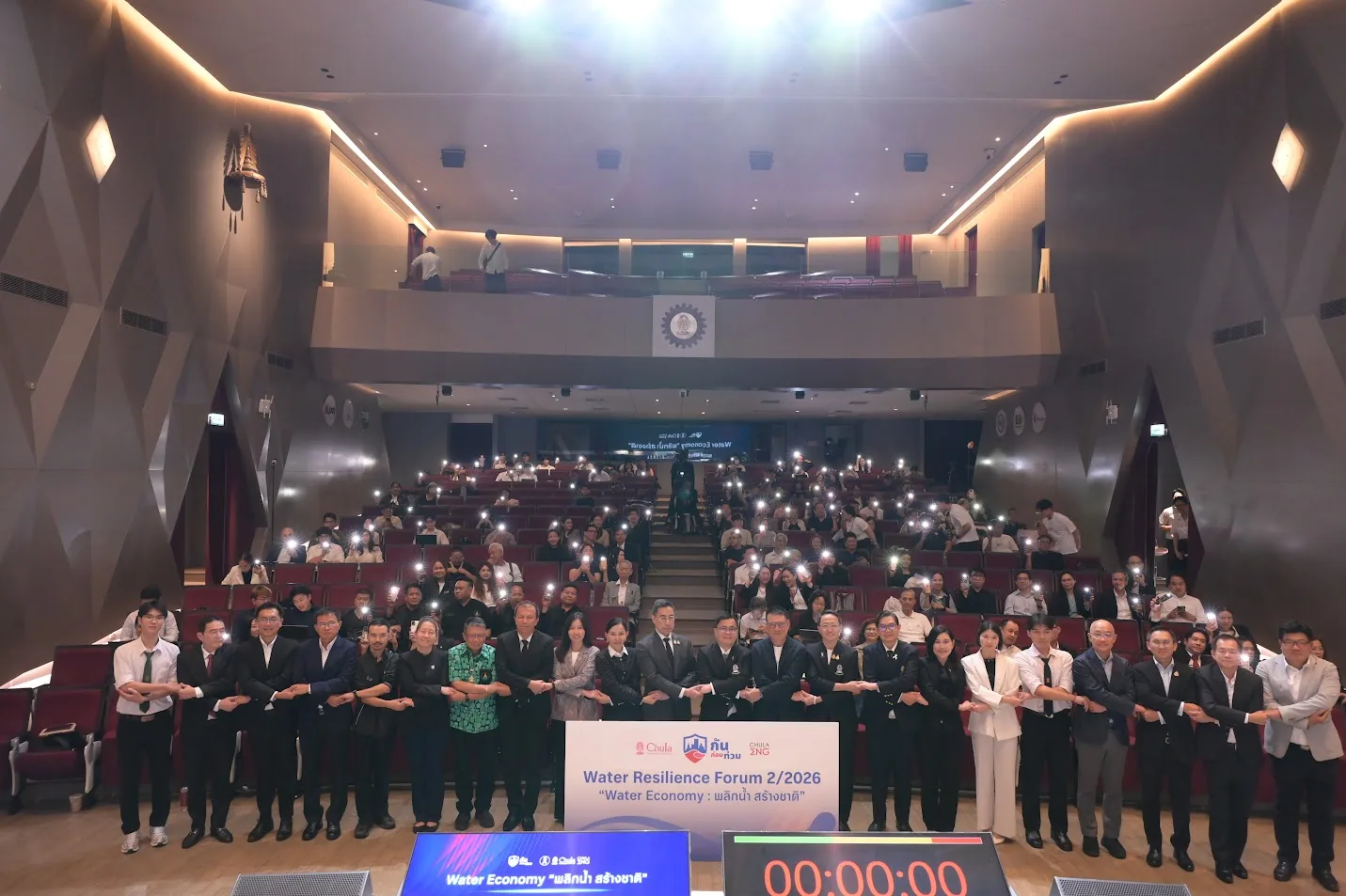
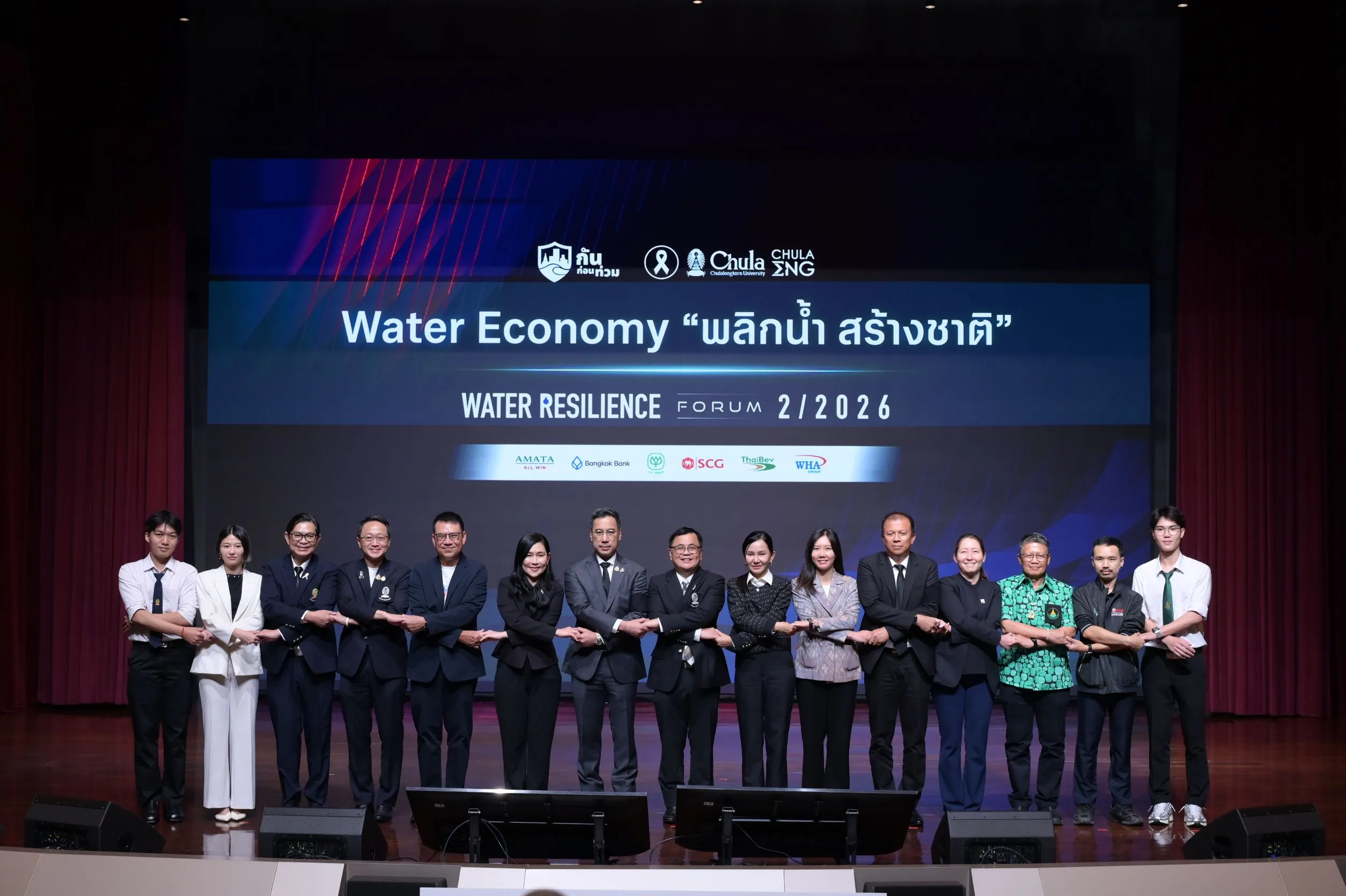

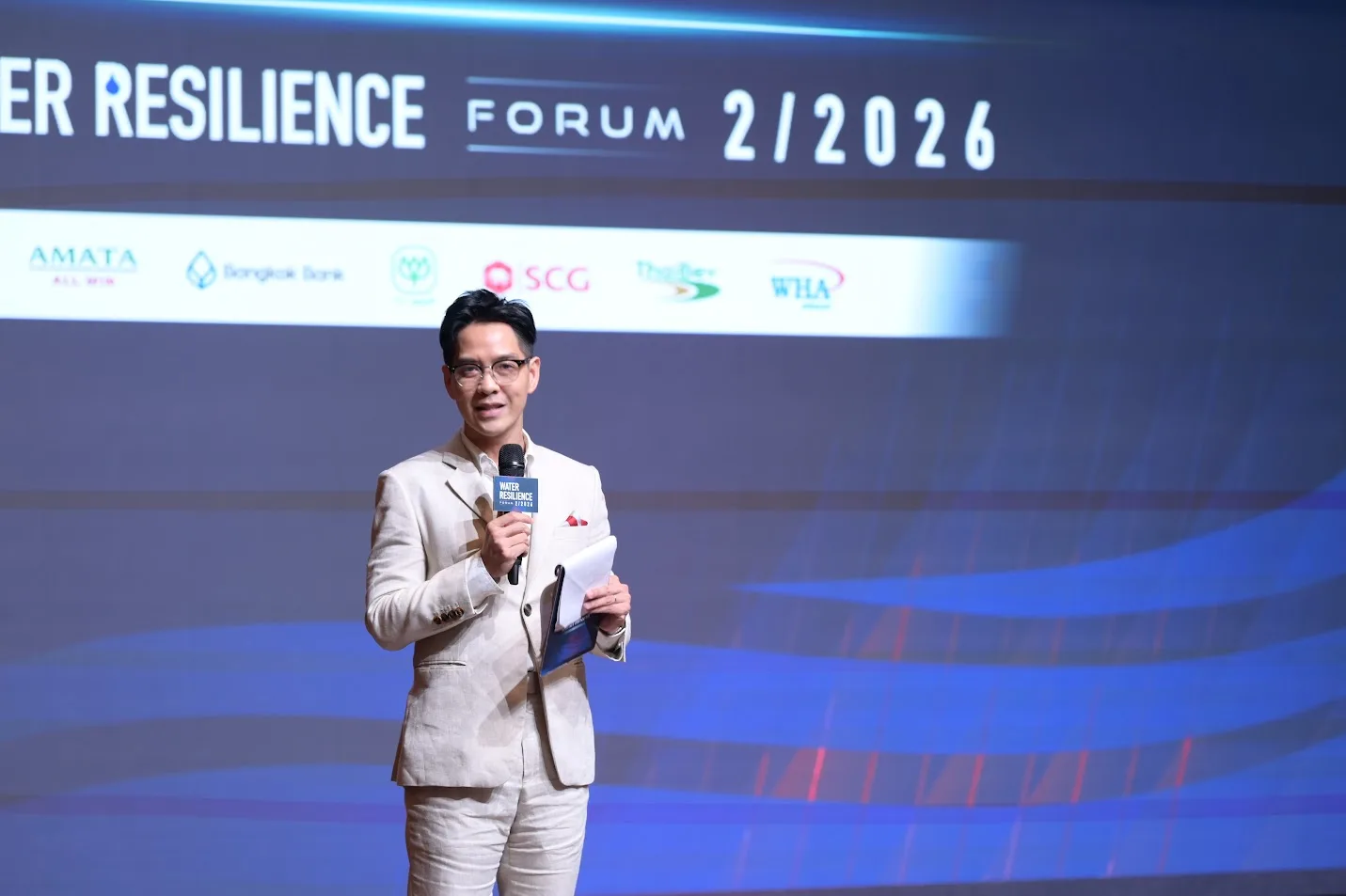
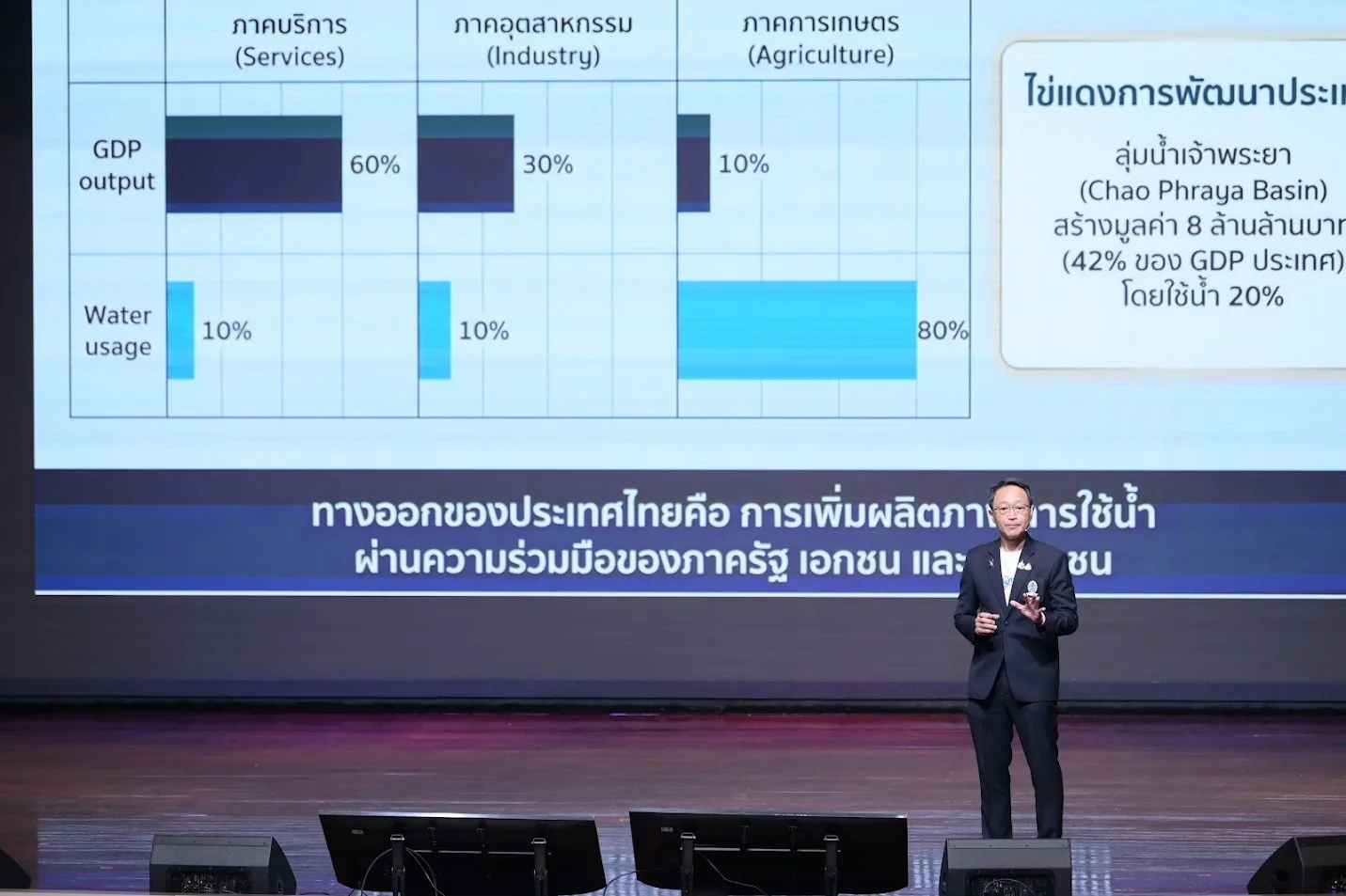

The Water Resilience Forum 2/2026 ultimately underscored that solving Thailand’s water challenges is not solely the responsibility of the government. It requires cooperation from communities, local wisdom, technology, academia, the private sector, and national policymakers. When scientific data and local communities work together, Thailand can truly “transform water to build the nation.”